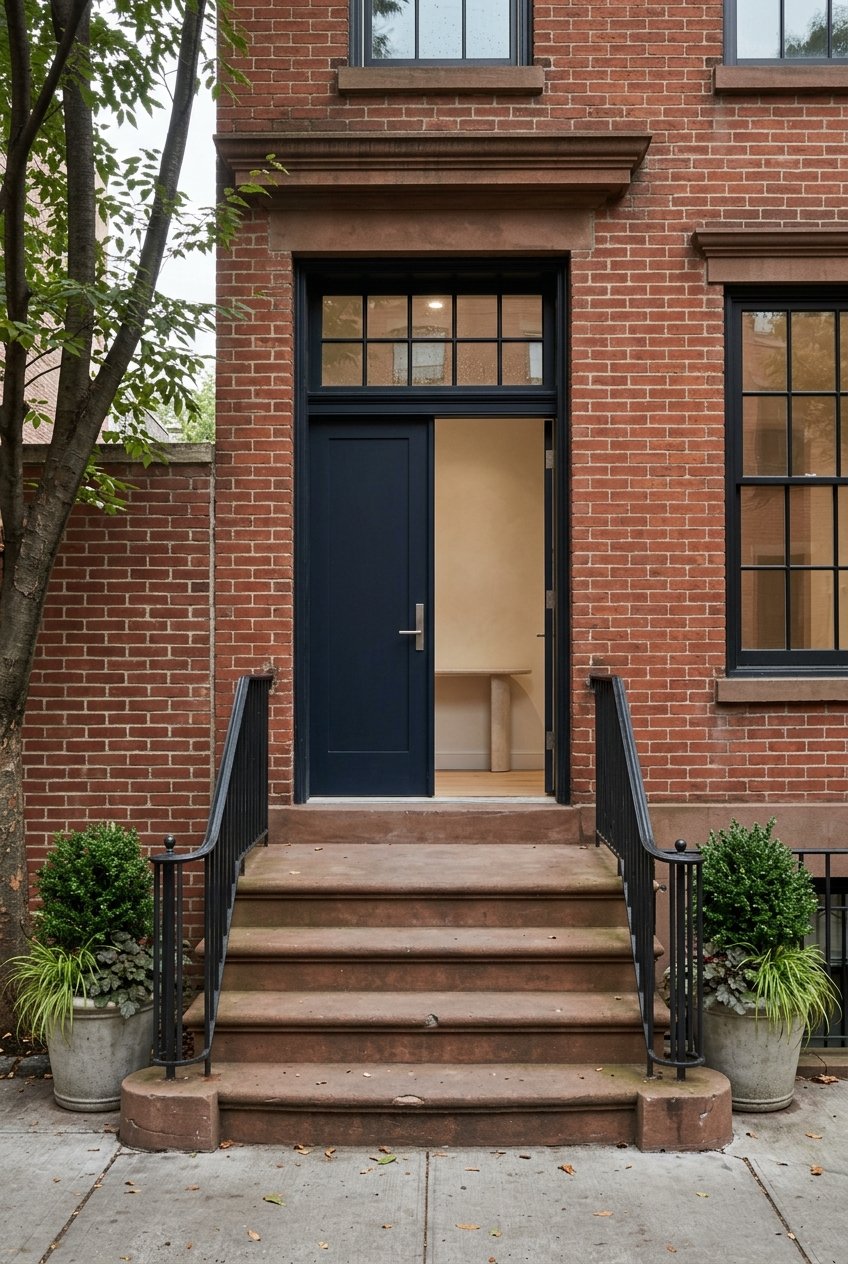
Trying to choose between a Bedford-Stuyvesant brownstone and a condo? You are not alone. In Bed-Stuy, that decision often comes down to a bigger question: do you want simplicity and predictability, or more control and long-term flexibility? This guide breaks down the real tradeoffs, from price and maintenance to financing and rental potential, so you can decide which path fits your goals. Let’s dive in.
Bed-Stuy offers two very different ownership paths
In Bedford-Stuyvesant, condos and brownstones can both put you in the neighborhood, but they usually deliver very different ownership experiences. The gap starts with price, then carries through to upkeep, monthly costs, and how much control you have over the property.
As of March 2026, Redfin shows a median sale price of $1,691,500 for Bedford-Stuyvesant overall, with homes spending a median of 112 days on market. Current inventory also shows a meaningful difference by property type: 58 condos at a median listing price of $878,000, versus 23 townhouses at a median listing price of $1.27 million. In practical terms, condos are often the lower-entry option, while brownstones and townhouses usually command a premium for space and full-building ownership.
Compare brownstone vs condo in Bed-Stuy
The simplest way to think about the decision is this: a condo usually offers easier day-to-day ownership, while a brownstone usually offers more autonomy and more moving parts. Neither is automatically better. The right fit depends on how you want to live, budget, and plan ahead.
| Factor | Bed-Stuy Condo | Bed-Stuy Brownstone |
|---|---|---|
| Entry price | Typically lower | Typically higher |
| Maintenance | Lower day-to-day owner burden | Owner handles building upkeep |
| Monthly costs | Mortgage, taxes, common charges, unit insurance | Mortgage, taxes, homeowner's insurance, maintenance reserve |
| Control | Subject to condo rules and board decisions | More direct control over building and use |
| Rental income potential | More limited by unit and building rules | Greater potential with legal rental units |
| Financing | Often flexible, but building must qualify | Financeable, but more property-level complexity |
Condo ownership is usually simpler
If you want a more streamlined ownership experience, a condo will often feel easier to manage. Fannie Mae describes condo ownership as a lower-maintenance option, and condo fees may help cover building insurance and reserves for future repairs.
That does not mean you can ignore the numbers. Before you buy, you still need to review common charges, board rules, reserve funding, master insurance coverage, and any special assessments. Those details can shape both your monthly costs and your risk after closing.
What your condo monthly budget may include
For most Bed-Stuy condo buyers, the monthly housing budget includes:
- Mortgage payment
- Property taxes
- Common charges
- Unit-level insurance
One detail many buyers miss is that condo fees are generally paid directly to the homeowners association, not folded into the mortgage payment. That makes it important to underwrite the full monthly cost, not just the loan amount.
Brownstone ownership gives you more control
A brownstone can offer a very different kind of value. You may get more space, more privacy, more freedom to shape the property, and in some cases the ability to generate income from legal rental units.
That upside comes with real responsibility. According to New York City agencies including HPD and DOB, property owners are responsible for keeping buildings safe and code-compliant, with ongoing attention to items like facades, sidewalks, boilers, elevators where applicable, and other building systems.
If the property has multiple units, your role can also extend beyond simple homeownership. HPD requires annual registration for buildings with three or more units, and for certain one- and two-unit buildings when neither the owner nor immediate family lives there.
What your brownstone monthly budget may include
For a brownstone, your monthly cost picture is usually broader and less fixed. It often includes:
- Mortgage payment
- Property taxes
- Homeowner's insurance
- A maintenance reserve for repairs and capital work
That reserve matters more than many first-time townhouse buyers expect. Older building components like masonry, roofing, plumbing, and heating systems can create uneven expenses over time, so your budget needs room for the unexpected.
Financing works differently for each option
Financing a condo and financing a brownstone are not the same process. You may qualify personally for both, but the property itself can affect the loan path.
For condos, Fannie Mae notes that eligible one-unit principal residences may qualify for financing up to 97% loan-to-value. At the same time, the condo project must meet project standards, so buyers should confirm whether the building is warrantable before assuming conventional financing is available.
Brownstones are generally underwritten as one- to four-unit residential properties. That can still be very financeable, but lenders are often reviewing more variables because the property is not just a single unit inside a larger building.
Why brownstone underwriting can feel more layered
For one- to four-unit properties, financing may involve closer review of:
- Unit count
- Property use
- Occupancy type
- Rental income documentation, if applicable
- Overall condition and property eligibility
Freddie Mac's standard purchase matrix shows primary-residence two-unit homes can go up to 95% loan-to-value, and three- and four-unit primary residences can also reach 95% in the standard matrix, though manual underwriting may differ. That does not make brownstones harder across the board, but it does mean the financing path may require more planning.
Rental income can change the equation
One of the biggest reasons buyers choose a brownstone is income potential. If you are buying a legal two-, three-, or four-unit property, qualifying rental income may help offset carrying costs.
Fannie Mae allows rental income from one- to four-unit investment properties to be used in qualifying, and it also provides a rental-income worksheet for principal-residence two- to four-unit properties. For the right buyer, that can make a Bed-Stuy brownstone function as both a home and a long-term asset.
A condo can still make sense if income is not part of your plan. But if you want the option to live in one part of a property and lease the rest on a long-term basis, a brownstone may offer more flexibility.
Do not rely on short-term rental assumptions
In New York City, short-term rental rules are strict. City guidance states that you cannot rent out an entire apartment or home to visitors for fewer than 30 days, even if you own or live in the building.
HPD also states that short-term rentals are only allowed for up to two guests staying with the host in the unit, not for entire-home stays. If you are evaluating income potential for a Bed-Stuy condo or brownstone, it is much safer to base your numbers on long-term leases.
Rent regulation is worth checking early
If you are considering a multi-unit property, do not assume you know the rent regulation status. In New York City, rent stabilization generally applies to buildings with six or more units built before 1974, though some newer buildings may also be covered through tax-benefit programs.
Many Bed-Stuy brownstones are smaller one- to four-unit properties, so they may fall outside that framework. Still, the right move is to verify the building's status rather than guess, especially if rental income is part of your purchase strategy.
Taxes matter in both scenarios
Property taxes are part of the ownership picture whether you buy a condo or a brownstone. In New York City, condo owners generally receive property tax bills directly from the Department of Finance.
Eligible owner-occupied condos may also qualify for the city's cooperative and condominium tax abatement. Brownstone owners pay property taxes directly on the building as well, but without a condo association structure in the middle, those obligations sit fully with the owner.
Which buyer is usually better suited to a condo?
A condo is often the better fit if you want an easier ownership experience and a lower entry point into Bedford-Stuyvesant. It can work especially well if you value predictable monthly planning and do not want to manage building systems, exterior issues, or city compliance tasks directly.
You may also prefer a condo if your priority is a more contained purchase with fewer operational responsibilities after closing. For many buyers, that simplicity is the feature, not the compromise.
Which buyer is usually better suited to a brownstone?
A brownstone is often the better fit if you want more space, more autonomy, and the possibility of rental income. It may also appeal to you if you are comfortable taking on older-building maintenance and treating the property as both a home and a long-term asset.
This path tends to suit buyers who are prepared for more hands-on ownership. The reward is greater control over the building, but the tradeoff is greater responsibility.
A simple Bed-Stuy decision framework
If you are still deciding, use this quick rule of thumb:
- Choose a condo if you want lower maintenance, lower entry pricing, and more predictable monthly ownership.
- Choose a brownstone if you want more control, more space, and possible long-term income from legal rental units.
In Bedford-Stuyvesant, the current pricing spread reinforces that split. With condos listed well below townhouses on median asking price, each option serves a different type of buyer and a different version of what ownership should feel like.
The best choice is not the one with the most square footage or the lowest monthly line item. It is the one that matches your financial plan, your risk tolerance, and how involved you want to be after the keys are in your hand.
If you want help weighing the numbers and narrowing the right fit in Bed-Stuy, The Horizon Team can guide you through the tradeoffs with a data-informed, personalized approach.
FAQs
What is the main difference between a Bedford-Stuyvesant brownstone and condo?
- A Bed-Stuy condo usually offers lower-maintenance ownership and a lower entry price, while a brownstone usually offers more space, more control, and more responsibility for building upkeep.
Are Bedford-Stuyvesant condos usually cheaper than brownstones?
- Based on current Redfin inventory cited in the research, Bed-Stuy condos have a median listing price of $878,000 versus $1.27 million for townhouses, making condos the lower-entry option in today's market.
What monthly costs should you expect with a Bedford-Stuyvesant condo?
- A Bed-Stuy condo budget usually includes your mortgage, property taxes, common charges, and unit-level insurance.
What monthly costs should you expect with a Bedford-Stuyvesant brownstone?
- A Bed-Stuy brownstone budget usually includes your mortgage, property taxes, homeowner's insurance, and a maintenance reserve for repairs and larger building expenses.
Can a Bedford-Stuyvesant brownstone help you qualify with rental income?
- If the property has legal rental units, qualifying rental income may be used in underwriting for certain one- to four-unit properties, depending on the loan structure and documentation.
Can you use short-term rental income for a Bedford-Stuyvesant condo or brownstone?
- In New York City, you should not count on entire-home short-term rental income under 30 days, because city rules prohibit that use in most cases.
Do Bedford-Stuyvesant brownstones fall under rent stabilization?
- Some may not, especially smaller one- to four-unit properties, but you should verify the building's actual status rather than assume it is exempt.
Which Bedford-Stuyvesant property type is better for lower-maintenance living?
- A condo is usually the better fit if your goal is lower-maintenance living with fewer building-level responsibilities.